
Causes of Leakage in Retaining Structures
Water can seep through cracks and joints in many materials such as concrete, stone, and brick. Numerous underground structures and buildings have experienced leakage. Empirically, about half of retaining walls or basement walls suffer from leakage during their operational life. Therefore, waterproofing in retaining walls is crucial.
Why Do Retaining Structures Leak?
The main reason is that the groundwater level is often high, and the resulting hydrostatic pressure causes water to leak through the structure.
Cracks and joints formed along the retaining structure, especially in nailing systems, and lack of a continuous, integrated construction create pathways for water infiltration.
Leakage may occur during construction or operation, and it must be prevented by proper waterproofing of the retaining walls.
Problems Caused by Water Leakage During Construction
-
Project delays due to falling behind schedule
-
Repair costs for already built parts
-
Legal liabilities for damage caused
-
Additional expenses and fines
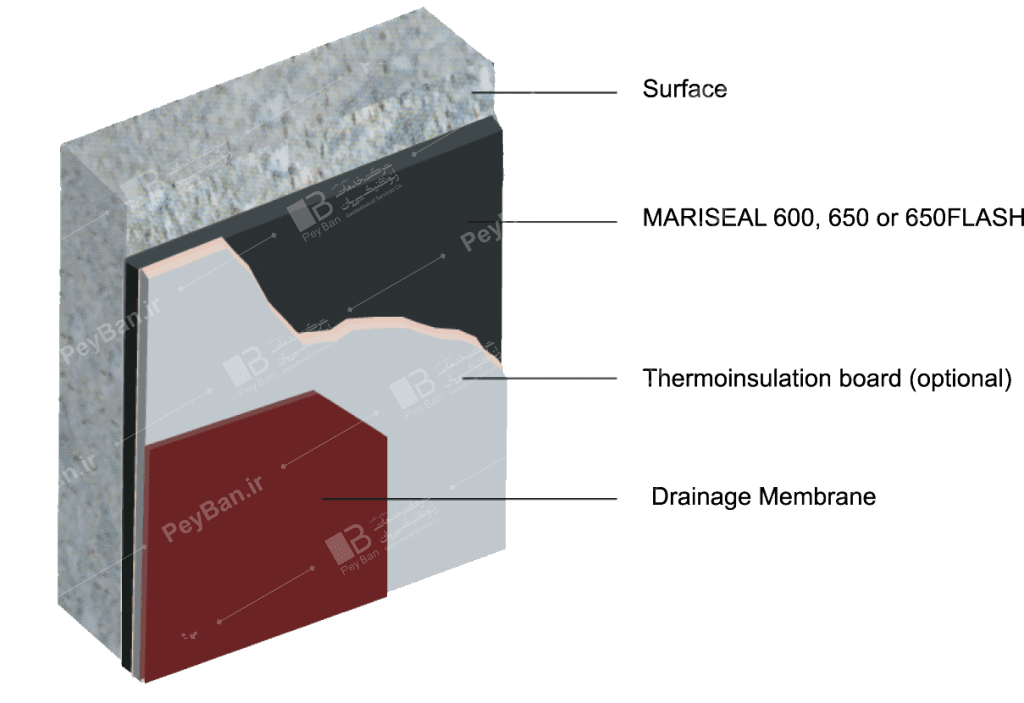
Problems Caused by Water Leakage During Operation
-
Structural weakening of the retaining wall
-
Repair and maintenance costs
-
Restricted access to basement areas
-
Damage to stored materials
-
Damage to electrical equipment and wiring
-
Legal liabilities and fines
Importance of Proper Waterproofing System Selection
Choosing the right waterproofing system is critical to solving leakage issues, aside from general water ingress risk management.
Each waterproofing method has its own advantages and disadvantages. The client must select the correct waterproofing technique according to their specific needs.
