
Deep Excavation of High-Rise Buildings and the Top-Down Construction Method
Urban Excavation Challenges with Increasing High-Rise Density
Due to the growing population density in megacities worldwide and the increasing demand for residential, commercial, and office spaces, vertical construction has become more significant. These tall buildings often require deep excavations to provide adequate parking spaces and maximize usable area. Consequently, stabilizing these deep urban excavations using various techniques, such as the top-down construction method (concrete or steel), has gained special importance.
Concept of the Top-Down Construction Method
The top-down method is an innovative and cost-effective technique for stabilizing deep excavations, revolutionizing the construction of extensive underground structures.
This method was first introduced in Tokyo, Japan, in 1935 to reduce construction time for an office building. Later, in 1950, an Italian company combined diaphragm walls with the top-down method to tackle excavations with high groundwater levels, further developing the technique.
During the 1970s, modifications to the design and execution process helped reduce project time and costs in metro station constructions in Paris and Milan. Since then, the top-down method has gained worldwide recognition, especially in Southwest Asia.
Execution Process of the Top-Down Method
Unlike traditional methods where construction proceeds from the bottom up, in the top-down method (concrete or steel), construction starts at ground level and moves downward to the foundation level.

Step 1:
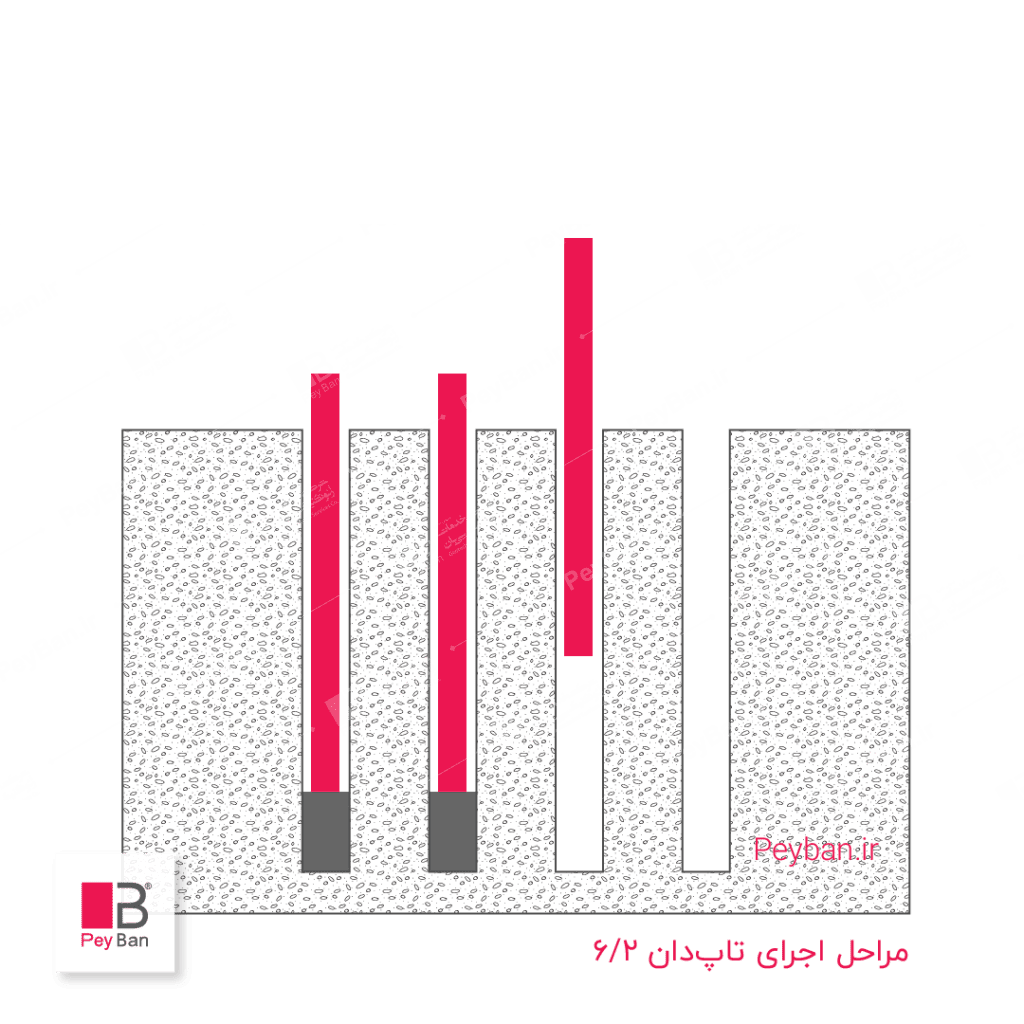
Drill shafts at the column locations down to the final column foundation depth (see Figure 1).
Step 2:
Install reinforcements and place columns inside the shafts (see Figure 2), then pour concrete for the column foundations. The shafts are then filled with a soil-cement mixture.
Step 3:
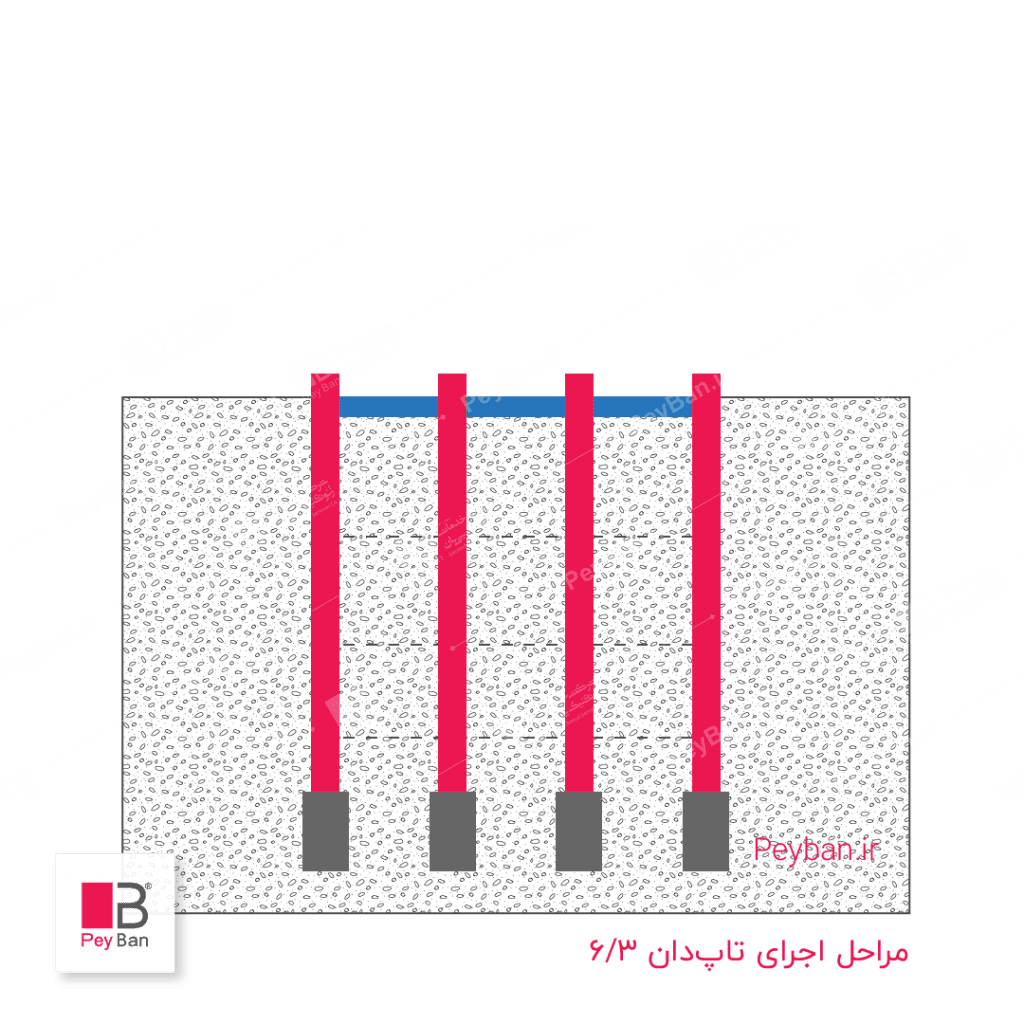
Level the ground surface and construct the ground floor slab (Figure 3). This concrete slab and supporting columns act as a temporary foundation.
Step 4:
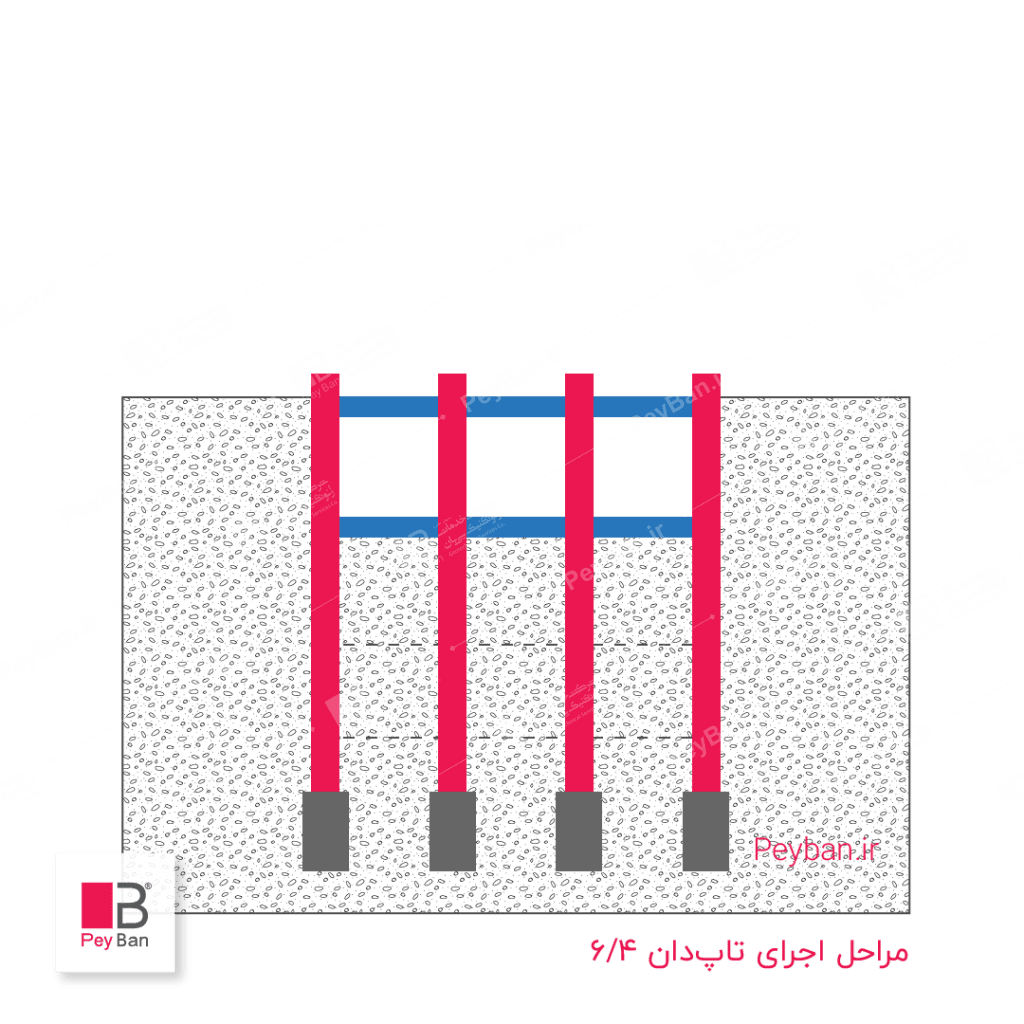
Once the ground floor slab attains sufficient strength, excavation continues beneath the slab through openings, often with ramps, down to the next underground floor level. The first basement slab is then constructed after ground leveling and placement of lean concrete (see Figure 4).
Step 5:
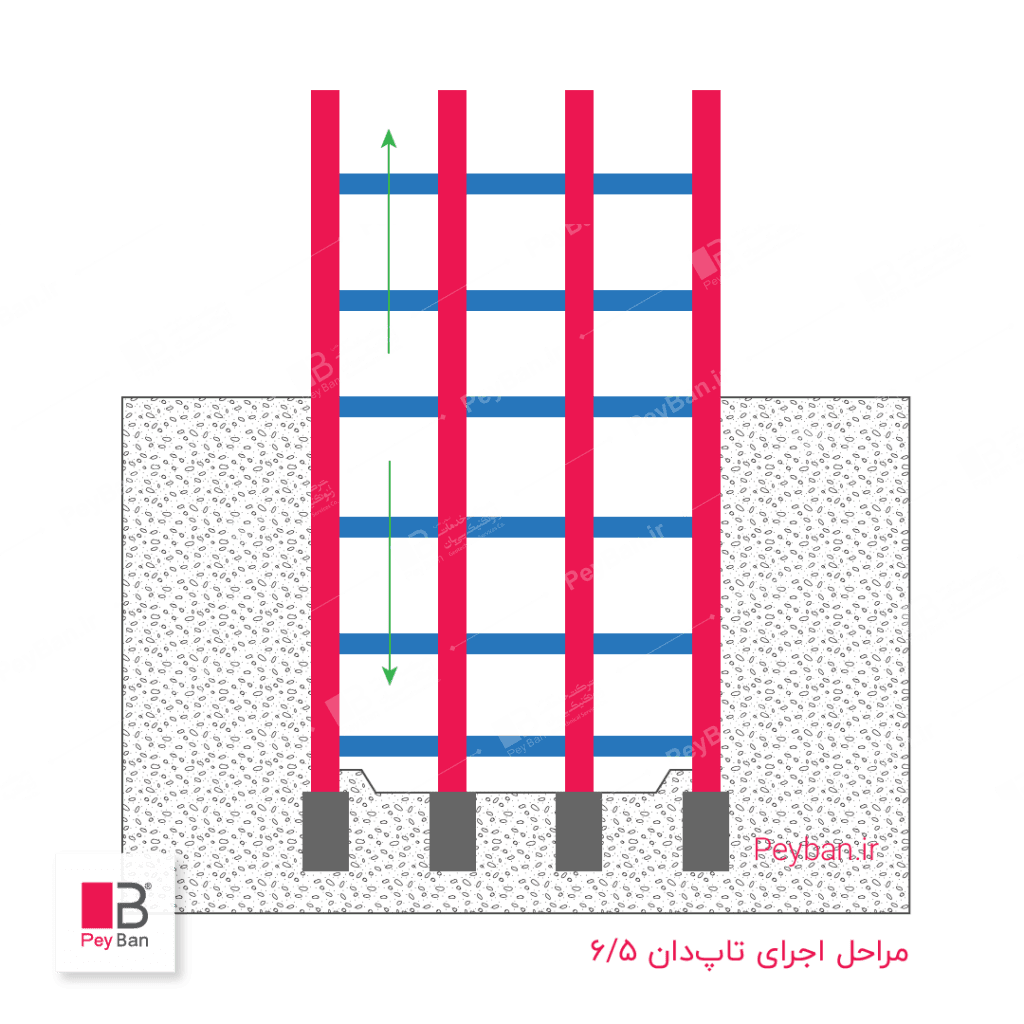
Simultaneous construction of the above-ground floors and the lower basement levels becomes possible (see Figure 5), accelerating project progress.
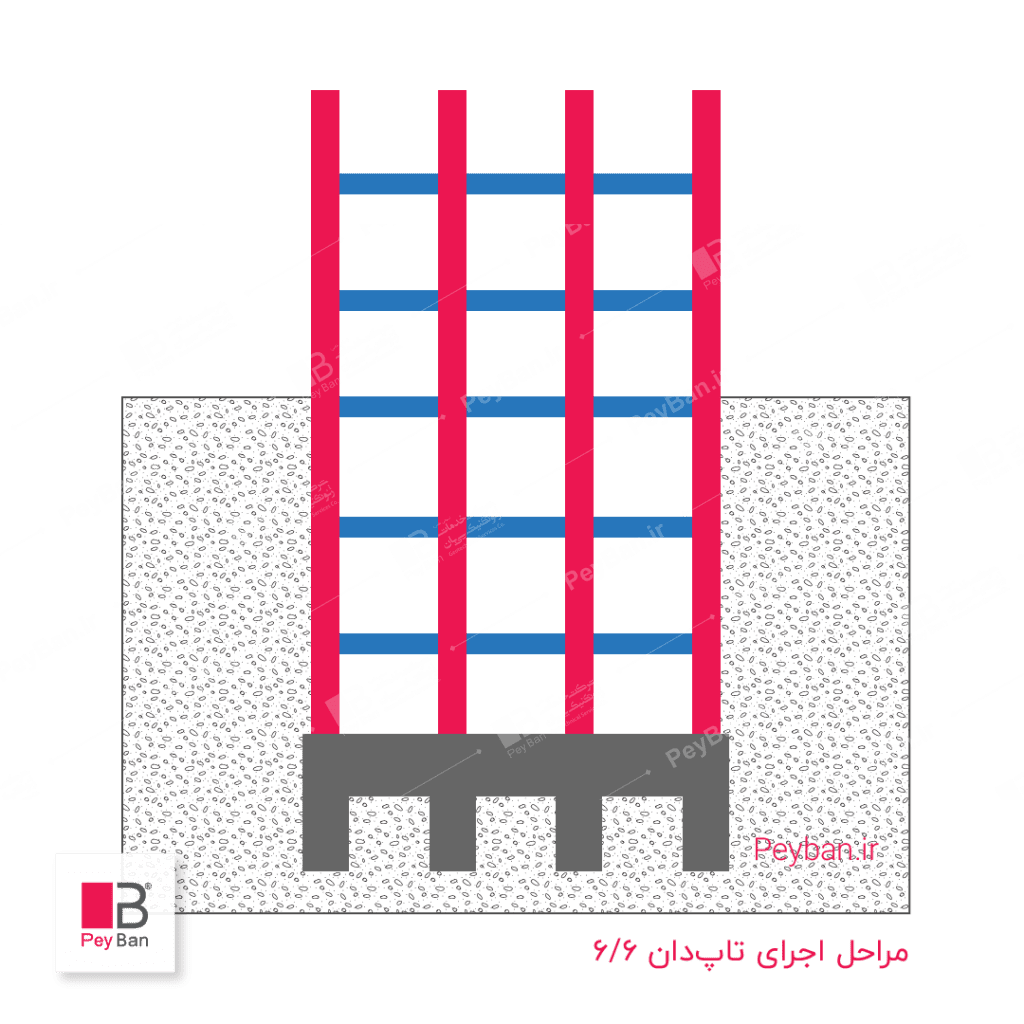
Step 6:
After excavation reaches the foundation level and the ground is leveled, excavation equipment is removed through the slab openings. The final foundation reinforcement and the base sections of retaining walls are installed, followed by concrete pouring for the final foundation (see Figure 6).
