
Jet Grouting and Its Role in Ground Improvement
Introduction
Jet grouting is one of the most advanced and effective ground improvement techniques, significantly enhancing the physical and mechanical properties of soil. Due to its wide applicability across various soil types and its ability to increase strength and reduce permeability, jet grouting has emerged as a powerful alternative to traditional injection methods, chemical grouting, trenching, pile systems, foundation enhancement, and compressed air or ground freezing techniques used in tunneling.
Jet Grouting Process
The process starts with drilling a borehole of 100 to 150 mm in diameter to the required treatment depth. After drilling, jet pipes are inserted into the hole. High-pressure grout is then injected through a nozzle to erode the surrounding soil. This process enables the grout to penetrate and replace loosened soil particles, forming a soil-cement mixture that substantially improves the mechanical and physical properties of the treated ground.
Advantages of Jet Grouting
One of the most significant benefits of jet grouting is its adaptability to various soil types. By injecting grout into soil pores, joints, and cracks, the structure’s mechanical integrity is improved. This leads to lower permeability, reduced deformation, and significantly increased strength.
Investigating the Effects of Jet Grouting
This study investigates the effects of jet grouting on soil properties before and after treatment, focusing on the influence of grout pressure and flow rate on unconfined compressive strength (UCS) of the soil-cement matrix. Five laboratory tests were conducted on jet-grouted soil: uniaxial compression, triaxial test, direct shear test, Brazilian tensile test, and Schmidt hammer test.
Research Findings
Results revealed a logarithmic increase in UCS with higher grout pressure and flow rate. This indicates that jet grouting significantly enhances cohesion and internal friction angle of the treated soil. Additionally, increasing the depth of jet grouting leads to higher confining pressure, affecting the diameter and strength of the resulting soil columns.
Conclusion
Jet grouting is a highly effective technique for soil stabilization and improvement due to its versatility and ability to enhance critical geotechnical properties. By adjusting grout pressure and flow, engineers can significantly increase soil strength and reduce permeability, making jet grouting a valuable method in complex civil engineering projects.
Keywords:
Jet Grouting, Soil Improvement, Grout Pressure, Grout Flow, Compressive Strength, Soil Permeability, Soil Stabilization
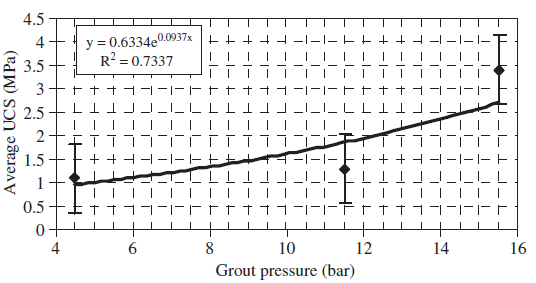
Figure 1: Relationship Between Grout Pressure and Average Uniaxial Compressive Strength
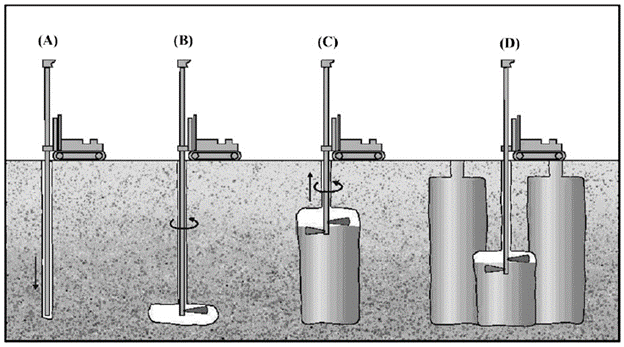
Figure 2: Execution Sequence of the Jet Grouting Method:
(a) Drilling
(b) Jet Test
(c) Jet Grouting and Column Formation
(d) Completion of Column Installation
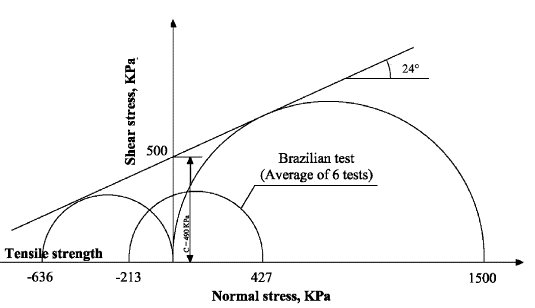
Figure 3: Estimation of Shear Strength from Tensile and Compressive Strengths
