
Definition of Soil
Soil is a material composed of five main components: minerals, organic matter, living organisms, gases, and water. The mineral particles in soil are categorized by size into clay, silt, and sand. The percentage of particles in these categories defines the soil texture. Soil mineralogy is diverse; for example, a clay mineral called smectite can shrink and swell significantly when wet and dry, which may damage structures.
Quartz is the most common mineral in soil, forming beautiful crystals but is chemically inert. Organic matter in soil includes decomposed plant, animal, and microbial residues, which are vital—indeed, the organic content percentage is one of the best indicators of agricultural soil quality. Soil color ranges from common browns, yellows, reds, grays, whites, and blacks to rare colors such as green and blue.
Soil Mechanics
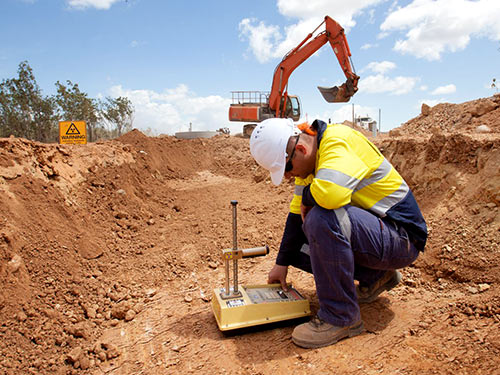
Soil mechanics is a branch of applied physics that best describes soil behavior. Unlike fluid or solid mechanics, soil is a heterogeneous mixture of fluids (usually air and water) and particles (typically clay, silt, sand, and gravel). Soil may also contain organic solids and other materials.
Natural soil samples usually contain particles of various sizes. Over time, agencies have established size limits for categories such as gravel, sand, silt, and clay. Geotechnical engineering, combined with rock mechanics, forms the theoretical basis for analysis in civil engineering and engineering geology.
Soil mechanics is used to analyze deformations and fluid flow in natural and artificial structures built on or from soil, as well as structures buried in soil—examples include buildings, bridges, retaining walls, dams, and buried pipeline systems. Its principles also apply in related fields such as geophysics, coastal engineering, agricultural engineering, hydrology, and soil physics.
Advanced Soil Mechanics Studies
Soils consist of mineral particles combined with air and water in voids, creating three-phase systems. A large part of the Earth’s surface is covered by soil, which is widely used in construction. Soil mechanics is the engineering branch that addresses soil’s engineering properties and behavior.
Advanced studies in soil mechanics focus on soil mass, plasticity, classification, stresses and strains under elastic equilibrium, stress and displacement in soil masses, pore water pressure due to undrained loading, permeability and seepage, reinforcement, soil shear strength, and foundation settlements.

Traditional Teaching Strategies
Most traditional teaching strategies, including classroom experiences, lectures, and assignments, are teacher-centered and do not adequately address the challenges of 21st-century engineering education. Two key issues exist in teacher-centered learning:
-
Lack of student engagement in developing essential problem-solving skills.
-
Failure to promote active learning.
Summary
As discussed, traditional teaching strategies are no longer sufficient, and new technologies significantly impact fields like soil mechanics. Geotechnical science thoroughly investigates soil mechanics and continuously advances civil engineering.
We hope you enjoyed this article and found answers to your questions about advanced soil mechanics studies.
