
Soil Improvement Process in Excavation Support
The soil improvement process using vertical drains is a common technique in excavation support, installed beneath surcharge loads to accelerate drainage and consolidation in low-permeability soils.
These drains shorten the drainage path for pore water, reducing drainage time in clayey soils used in excavation support (retaining structures, nailing, anchoring, micropiles, top-down, etc.) from several years to just a few months. The most common types of vertical drains in excavation support are sand drains and prefabricated vertical drains.
Sand Drains for Accelerated Consolidation
Sand drains are installed by drilling holes into clay layers using rotary augers, continuous flight augers, or by driving hollow mandrels into the ground. These holes are then filled with sand.
When surcharge loads are applied, pore water pressure increases and is dissipated through vertical and horizontal drains, thus accelerating settlement in excavation support projects. Figure 2 shows a typical example of sand drains.
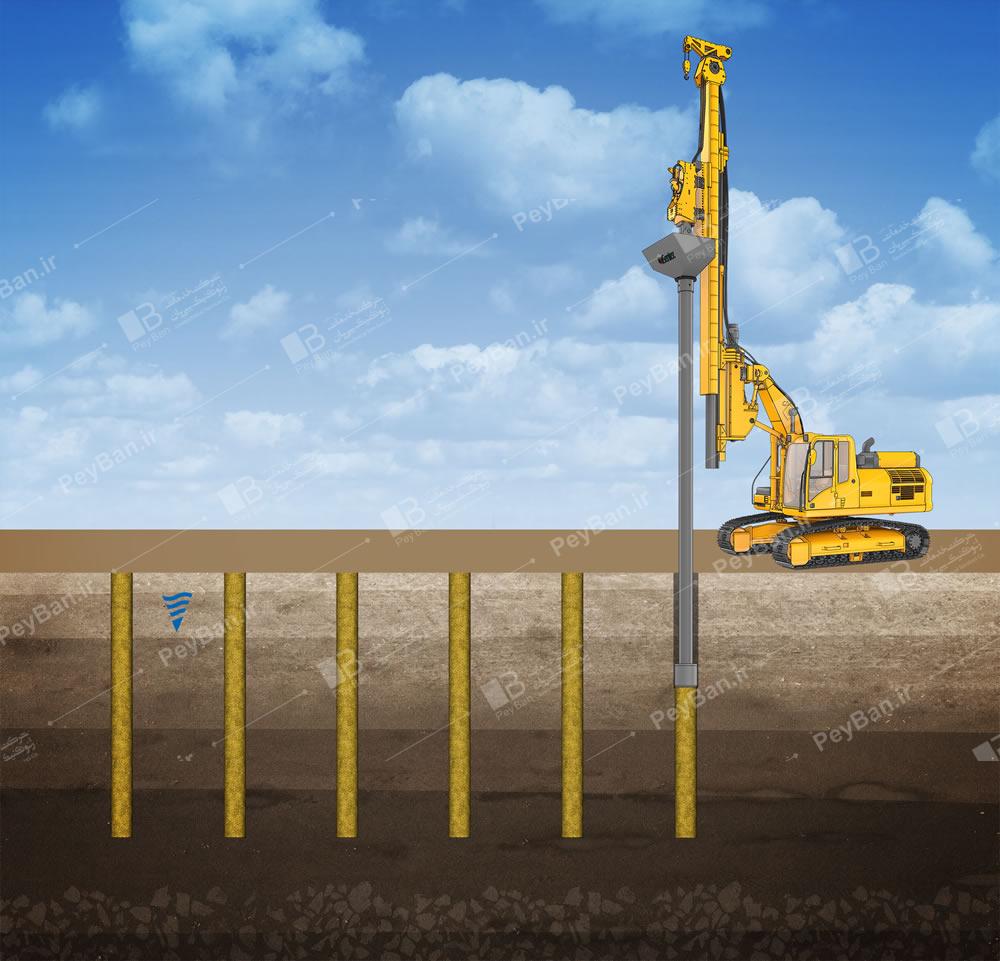
Figure 1. Sand Drains
Sand drains can act like sand piles, reinforcing the soil in excavation support (retaining structures, nailing, anchoring, top-down, etc.). Although sand drains replace only 1-2% of the soil volume, they can increase pile bearing capacity by more than 10%.
Disadvantages of Sand Drains
-
Installation by drilling disturbs the soil, reducing water flow inside the drains.
-
Voids may form between sand particles during filling, decreasing efficiency.
-
Increased diameter of sand drains leads to higher construction challenges and costs.
