
Installation Process of Stone Columns in Soil Improvement
Soil improvement using stone columns is a common technique in enhancing weak soils for excavation support systems. Stone columns are mainly used in cohesive soils to increase shear strength, reduce excessive settlement, and accelerate drainage through horizontal drains.
As illustrated in Figure 1, stone columns are constructed by drilling holes through clayey soils down to the hard strata, which are then backfilled with compacted gravel. These columns may be installed as individual columns, continuous walls, or panel groups, depending on design requirements.
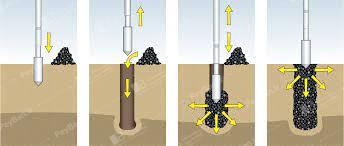
Figure 1. Stone Column Installation Process in Soil Improvement for Excavation Support
(Excavation support using retaining structures, nailing, micropiles, anchoring, top-down methods, etc.)
Why Use Stone Columns?
Compared to sand drains, stone columns are preferred because the granular material provides higher shear resistance to the surrounding soil. The stone columns used in soil improvement for excavation support (retaining structures, nailing, anchoring, top-down, etc.) induce arching effects, transferring more load to the stiffer column elements.
Additionally, combining stone columns with geosynthetic reinforcements offers an effective and economical solution for supporting structures built on soft clay. Due to stiffness contrast between stone and soil, geosynthetics redistribute stresses from the soil to the stone columns, significantly reducing both differential settlement and lateral deformation.
