
Soil Stabilization by Heating and Freezing
The theory of soil stabilization by heat and freezing in excavation support suggests that the more heat is applied to the soil mass, the more effective the stabilization becomes. Even a small increase in temperature can improve soil grain strength by reducing electrostatic interactions and decreasing moisture through evaporation.
Heating Techniques for Soil Improvement
Heating is typically achieved by burning liquid or gas fuels inside boreholes or injecting hot air into them. Borehole diameters range from 0.15 to 0.2 meters, producing stabilized zones of 1.3 to 2.5 meters after around 10 days.
This method is usually used when a low-cost heat source is available near the excavation site (retaining walls, nailing, anchoring, top-down, etc.).
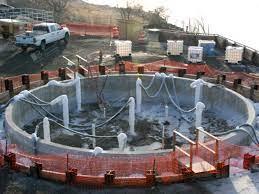
Soil Freezing in Excavation Support
Soil freezing involves lowering the temperature of the soil until the pore water freezes. The ice acts as a cementing agent, increasing shear strength and reducing permeability.
🔹 Key Difference: Heating vs. Freezing
Unlike heating, freezing is effective across a wide variety of soils and grain sizes. The only essential factor is the presence of moisture between soil particles. It is widely used in geotechnical stabilization of excavations.
How Soil Freezing Works
The process typically involves installing double-walled pipes in the soil. A coolant circulates in a closed loop, maintained by a refrigeration plant.
These thermal methods of heating and freezing can significantly improve soil properties and are especially useful in geotechnical excavation projects.
