
Features of Cantilever Sheet Piles
Sheet piles used in excavation support systems include several types such as cantilever sheet piles, anchored sheet piles, bored sheet piles, and cofferdam sheet piles.
Cantilever Sheet Piles
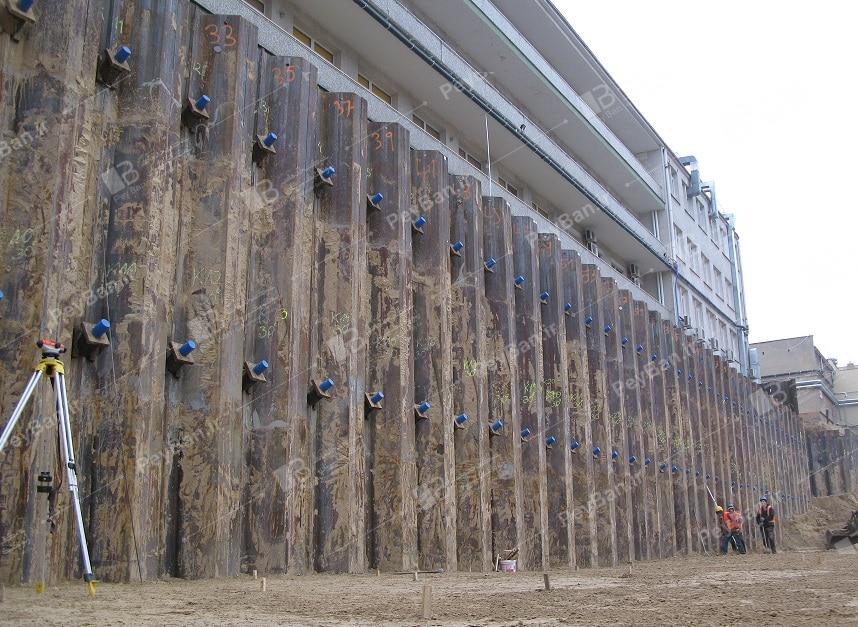
These are typically used for excavations (supported by retaining structures, nailing, anchoring, micropiles, or top-down methods) up to 6 meters deep.
In geotechnical projects, cantilevered embedded retaining structures are used for both temporary and permanent excavation support, highway structures, and flexible slides. They are usually applied as temporary systems, while diaphragm walls are preferred for permanent use.
Anchored Sheet Piles
When the height of sheet piles used in excavation support (retaining structures, nailing, anchoring, top-down, etc.) is less than 6 meters, it is cost-effective to install anchors near the top. Anchors reduce embedment depth and bending moment on the sheet pile.
When properly executed, anchored sheet piles experience less lateral deflection compared to traditional braced walls, resulting in improved performance. The required excavation for anchor installation is minimal, ensuring ease of construction.
Bored Sheet Piles
These systems include enhanced profiles, either through overlapping joints or interlocking mechanisms. Depending on design loads, they may function as cantilevered or anchored systems.
As excavation progresses, anchors are installed in stages, creating a reinforced soil mass behind the sheet piles. This forms an integrated retaining wall, enabling deep excavations across a wide range of soil conditions.
Cofferdam Sheet Piles
Cofferdam-type sheet piles are temporary structures used to keep soil and water out of an excavation zone where a new structure will be built.
They are essential when construction must occur below the water table, providing a dry work environment. Sheet piles are installed around the site and impermeable concrete plugs are placed beneath them to prevent water seepage under the wall.
