
Retaining Structures in Construction Projects
Introduction
One of the primary challenges for engineers and contractors in the construction industry is stabilizing and securing the soil at excavation sites. With the increase in building heights and excavation depths, this challenge has gained critical importance. In this article, we will explore the technical aspects and significance of retaining systems in construction projects.
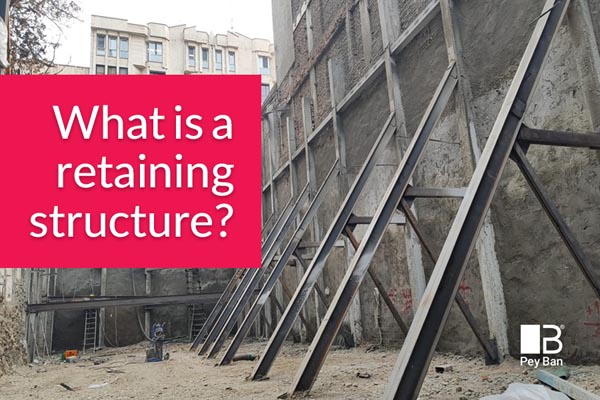
What Is a Retaining Structure?
A retaining structure is a system designed to stabilize excavation walls and prevent soil collapse or displacement. These structures allow engineers to safely carry out excavations, even in areas with complex geotechnical conditions.
Types of Retaining Structures
Retaining structures are designed and implemented in various forms, each with its own unique characteristics and applications. The most common types include:
Diaphragm Wall
Diaphragm walls are reinforced concrete retaining systems used to provide long-term stability to excavation walls. These structures can withstand substantial lateral forces.
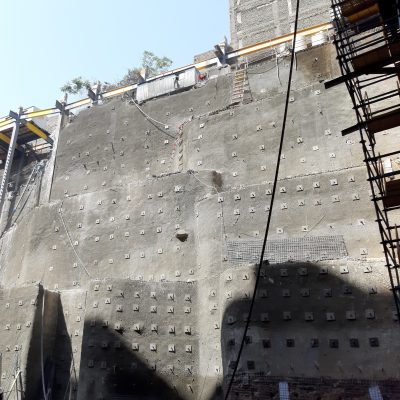
Soil Nailing System
Soil nailing involves inserting steel bars into the excavation wall, which are then covered with shotcrete. This method is highly effective for stabilizing walls in unstable soils and urban environments.
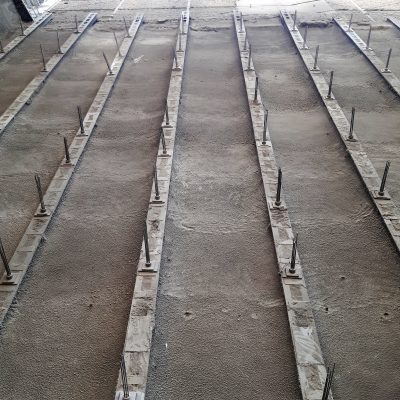
Anchored Walls
Anchored walls use steel anchors that are installed into the excavation walls and stabilized using reinforced concrete. This approach is suitable for deep and high retaining walls.
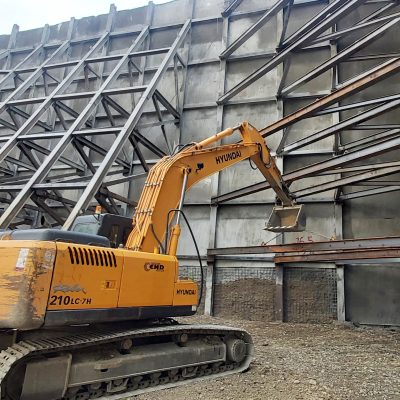
Steel Bracing
Steel bracing is an internal temporary support system used in construction projects to prevent soil movement and wall collapse during excavation.
Design and Execution Stages of Retaining Structures
Geotechnical Investigation
The first step in designing a retaining structure is to conduct thorough geotechnical studies. This includes analyzing the mechanical and physical properties of the soil, stability assessments, and determining design parameters.
Structural Design
Based on geotechnical data, the type and dimensions of the retaining system are designed. Engineers use advanced software such as PLAXIS and GeoStudio for modeling and analysis.
Construction
This stage includes site preparation, equipment installation, and the implementation of the retaining system according to technical drawings and specifications. Accurate supervision during execution is essential to ensure quality and safety.
Advantages and Disadvantages of Retaining Structures
Advantages
-
High safety: Prevents soil collapse and movement, reducing human and financial risks.
-
Versatility: Can be used in various soil types and geotechnical conditions.
-
Durability: Provides long-term stability for excavation walls.
Disadvantages
-
High cost: Requires significant investment in studies, design, and implementation.
-
Time-consuming: Proper construction takes more time.
-
Technical expertise needed: Demands experienced engineers and specialists.
Innovations and Modern Technologies in Retaining Structures
Advanced Materials
Using modern materials such as carbon fibers and reinforced polymers can improve the performance and durability of retaining systems.
Monitoring Technologies
Advanced sensors and monitoring systems enable real-time tracking of soil movement and changes.
Prefabricated Construction Methods
The use of prefabricated concrete and steel components can speed up implementation and improve construction accuracy.
Conclusion
Retaining structures play a vital role in construction projects by ensuring the stability and safety of excavation walls. Selecting the appropriate type and executing it properly requires technical knowledge and engineering expertise. By utilizing innovative technologies and modern materials, the efficiency and longevity of these systems can be enhanced, contributing to safer and more successful construction outcomes.
