
Reliability of Soil and Improvement Methods on Organic Clay
Soils in various regions often face unique geotechnical challenges such as high water tables, compressible clays, and organic soils. Many of these areas are water-eroded, marshy, and covered with weak soils, making safe and stable construction difficult.
Soil improvement techniques play a vital role in increasing strength, load-bearing capacity, and reducing the susceptibility to natural forces. These methods reduce volumetric changes, control permeability, and provide long-term durability under harsh environmental conditions.
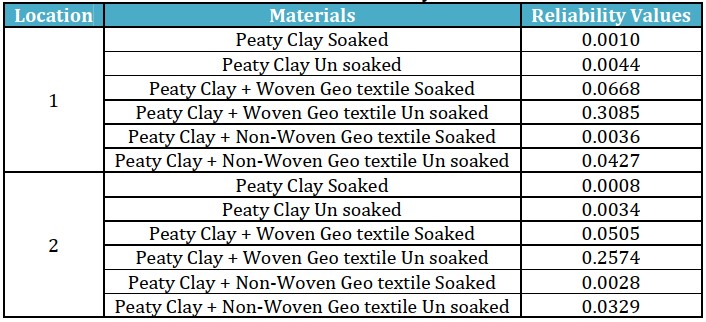
This study investigates the reliability of soil improvement techniques applied to organic clay at a depth of 1 meter using Unconfined Compressive Strength (UCS) and California Bearing Ratio (CBR) tests.
A variety of chemical additives and geotextiles were used over 7-day, 14-day, and 28-day curing periods, including:
-
Chemical materials: Calcium oxide, calcium hydroxide, calcium chloride, cement, aluminum hydroxide, sodium silicate
-
Geotextiles: Immersed and non-immersed woven and non-woven types
-
Chemical additives significantly enhanced shear strength and controlled the swelling and shrinkage of the clay, making them a reliable soil improvement technique.
-
Geotextiles also improved overall soil resistance, validating their effectiveness.
-
CBR and UCS results showed an increase in strength with chemical additive content ranging from 2% to 10% by weight. However, optimal results were generally achieved at around 6%, after which performance gains plateaued or declined.
-
Among all additives, calcium oxide yielded the highest strength gains. However, considering both performance and cost, cement and calcium oxide emerged as the most cost-effective solutions.
-
Figure 1: Summary of CBR Test Values on Improved Organic Clay

-
Figure 2: Chemical Properties Used in the Study
