Reasons for Using Diaphragm Wall and Soil Nailing Methods in Excavation Support
Diaphragm Wall Method
The diaphragm wall method involves the use of specialized and expensive excavation machinery, making it generally uneconomical for small-scale excavation projects. These machines and their associated slurry treatment plants require significant working space, so if site access is limited on either side of the excavation, implementing diaphragm walls becomes very difficult or even impossible. Furthermore, operating such equipment demands highly skilled personnel. Therefore, this method is mostly applied for large-scale excavations with long retaining walls.
When Is Diaphragm Wall Preferred?
According to studies, the main reasons for choosing diaphragm walls are high groundwater levels and extensive excavation areas. This method also offers very high safety levels and fast construction speed, which are additional advantages in large excavation projects.
Soil Nailing Method
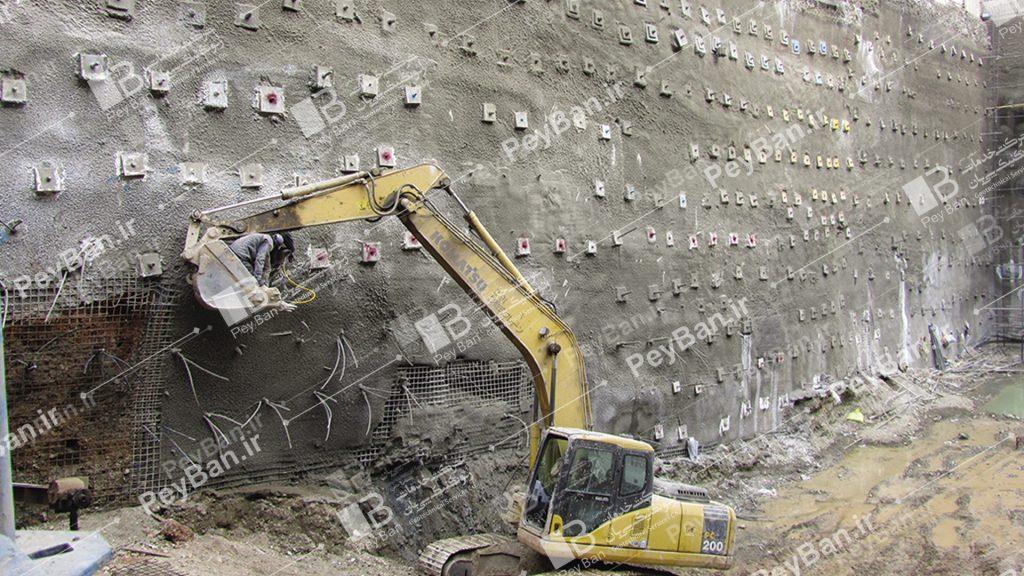
Soil nailing is a widely used technique in building excavation projects due to its high speed, economic efficiency, minimal need for heavy machinery, and non-interference with main construction activities. Successful application depends on cohesive soil conditions and permission from neighboring properties. In non-cohesive soils, drilling and installing nails may face difficulties.
Typical Use Cases in Local Projects
In many local projects examined, groundwater levels are low and excavation areas are relatively small. These factors, combined with the unique advantages of soil nailing, make it the preferred method for retaining wall support.
However, in cases where neighboring properties do not permit the use of soil nailing, combined systems incorporating other support methods are applied. For example, the Saadi Commercial Complex in Shiraz employed a combination of soil nailing, anchoring, and bracing systems to stabilize the soil.
Summary Comparison
-
Diaphragm Wall: Best suited for large-scale excavations with high groundwater levels, providing high safety and rapid construction.
-
Soil Nailing: Ideal for cohesive soils and sites with low groundwater levels, offering cost-effectiveness, fast implementation, and minimal machinery requirements. Commonly used in small to medium urban projects.