
Anchored Retaining Structure Design
Anchorage, also known as tiebacks or soil anchors, is one of the most effective methods for stabilizing deep excavations. Its construction process closely resembles the nailing method.
Types of Excavation
Figure 1 illustrates a deep excavation with an irregular rectangular shape, covering about 33,500 m². The site is divided into two rectangular zones: Area A and Area B, each designed with different retaining systems. Area A and B have average excavation depths of 23.1 m and 14.9 m, respectively.
Wall and ground displacements, along with axial forces during construction, were monitored using standard instruments. Monitoring included inclinometers inside secant pile walls, force sensors in tiebacks, and horizontal displacement and settlement points on the west and east sides of the excavation.
Based on 90 boreholes, the site profile was categorized into five soil layers. Figure 2 presents the soil stratigraphy and anchored wall profile. The vertical spacing of anchors was 3 meters; the horizontal spacing was 2.2 meters for the second and third rows, and 1.1 meters for others.
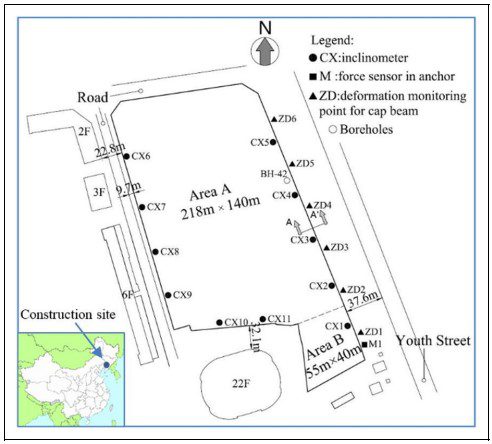

Figure 2: Secant Wall and Subsurface Profile
Key Notes on Anchorage Systems
Soldier piles are installed to resist punching shear and enhance wall stability. In the absence of soldier piles, anchorage can be executed using metallic plates or concrete pads.
Concrete blocks may be reinforced with welded wire mesh and sprayed with shotcrete. Behind these walls, geocomposite drainage strips must be placed.
This technique allows the prestressing force in the tendons to compact the surrounding soil, reducing lateral earth pressure by increasing soil density and stability.
The lateral earth pressure adjacent to the excavation is transferred to stable inner soils, which act as the retaining body and support the unstable outer layers.
Anchorage can be applied in both soil and rock. However, soft clays are generally unreliable for anchorage due to their deformation behavior.
It’s essential not to grout the unstable soil zone until the tendon has been fully tensioned. This ensures the tendon can stretch under the applied load without constraint.
