
Bottom Slabs in the Top-Down Excavation Method
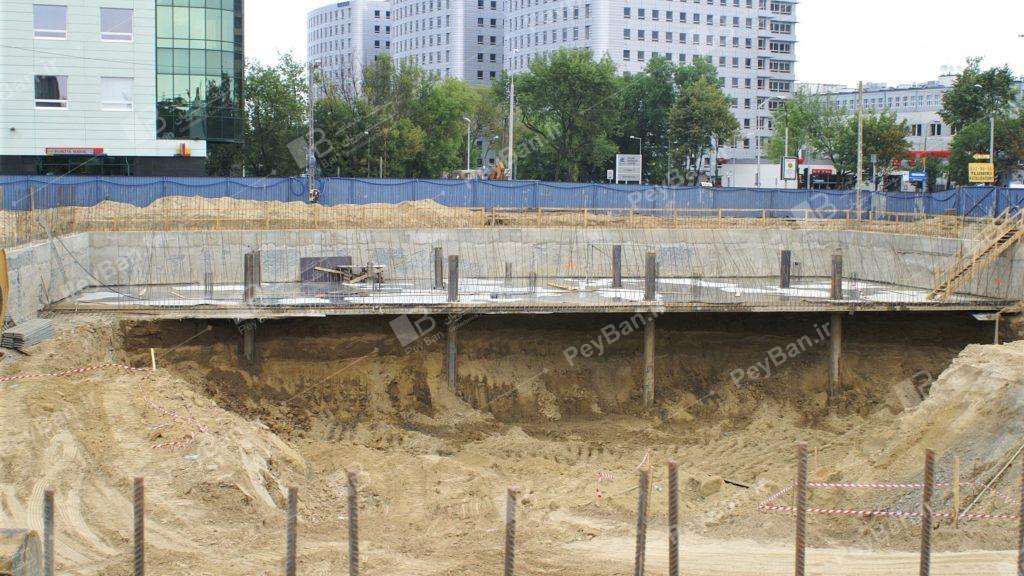
Bottom slabs constructed using the Top-Down method play a significant role in optimizing excavation support systems. These slabs are permanent structural elements, and their construction quality directly affects their long-term functionality.
The construction quality and placement elevation of bottom slabs in excavation support systems (retaining walls, nailing, micropiles, anchoring, top-down, etc.) are influenced by soil uplift pressure during unloading and resettlement due to the weight of concrete on soft clayey soils.
Factors Affecting Soil Uplift Pressure Under Slabs:
-
Soil properties
-
Unloading method and magnitude
-
Excavation depth
-
Duration of exposure to excavation
Studies show that uplift pressure is lower near diaphragm walls and columns and higher in central zones. On average, about 84% of total uplift pressure develops within 14 days of excavation.
Factors Affecting Resettlement Due to Recompression:
-
Structural load (self-weight)
-
Bearing capacity of subgrade soil
-
Stiffness of concrete
Recompression and settlement may occur due to the weight of concrete, subgrade limitations, and formwork flexibility.
Typical Settlements:
-
Average slab settlement: ~10 mm
-
Beam settlement for sizes:
-
0.8m × 0.8m → 24.5 mm
-
1.2m × 1.4m → 30 mm
-
1.4m × 1.2m → 31 mm
-
