
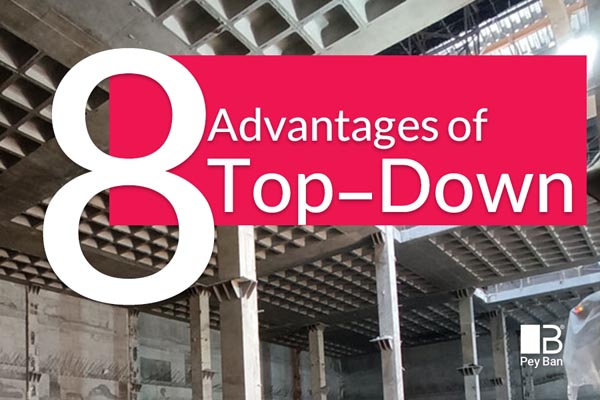
Advantages of the Top-Down Construction Method
The Top-Down method has gained popularity compared to other excavation methods due to its unique features and benefits—especially in complex urban projects. By minimizing the need for temporary retaining structures, avoiding legal disputes with neighbors, enabling simultaneous construction of substructure and superstructure, and reducing both cost and construction time, this method is recognized as an effective and efficient solution for deep excavations and special structures. This introduction provides a solid foundation for a closer examination of the advantages of the Top-Down method.
No Need for Neighbor Consent
The method minimizes legal and logistical issues related to obtaining permissions from adjacent property owners.
Eliminates Temporary Retaining Structures
With built-in structural stability, it removes the need for temporary supports, reducing overall construction costs and time.
Simultaneous Construction of Superstructure and Substructure
Allows for parallel progress of both upper and lower structures, accelerating the overall project timeline.
Suitable for Deep Excavations
Ideal for deep and complex construction projects, particularly in urban environments.
Applicable to All Types of Structures
Whether the structure is concrete or steel, precast or cast-in-place, the Top-Down method can be implemented effectively.
Feasible in Various Soil Conditions
Can be executed in both narrow, confined areas and large, open construction sites.
Reduces Overall Project Cost and Time
By eliminating temporary supports and maximizing time efficiency, this method results in faster and more cost-effective projects.
Environmentally Friendly
Minimizes environmental disruption and reduces pollution during the excavation and construction process.
