Advantages of the Top-Down Construction Method
The Top-Down (TD) construction method offers several significant benefits, particularly for large-scale urban projects:
-
Time and Cost Savings by Eliminating Temporary Retaining Structures:
When permanent retaining walls are constructed, the need for temporary support structures can be eliminated, resulting in reduced construction time and cost. -
Minimized Load Changes and Reduced Structural Deformations:
In the Top-Down method, the gradual replacement of excavated soil by the new structure minimizes load variations. This reduces deformations in the new structure and adjacent buildings (Katzenbach et al., 1998). Consequently, settlement caused by new construction is greatly reduced. -
Noise Reduction and Space Optimization During Construction:
Excavation noise is largely absorbed by the basement floors as they are constructed, significantly lowering noise pollution. Additionally, basement floors become available as storage spaces during construction, which is highly valuable for site logistics. -
Accelerated Superstructure Construction Through Staged Design and Control:
By applying phased construction design and control, superstructure floors can be built immediately after the ground floor slab is completed and even before basement floors are finished. This can reduce the overall project schedule by several months, allowing earlier revenue generation and faster start of new projects. -
Economic Savings Despite Higher Cost of Diaphragm Walls:
Even when using more expensive perimeter walls such as diaphragm walls, early project completion often leads to significant economic benefits. For example, in the Aldersgate Street project in London, the Top-Down method enabled the construction of 7 superstructure floors while 14 basement levels were still being excavated (Marchand, 1993b). -
Slab as Formwork and Support for Excavation:
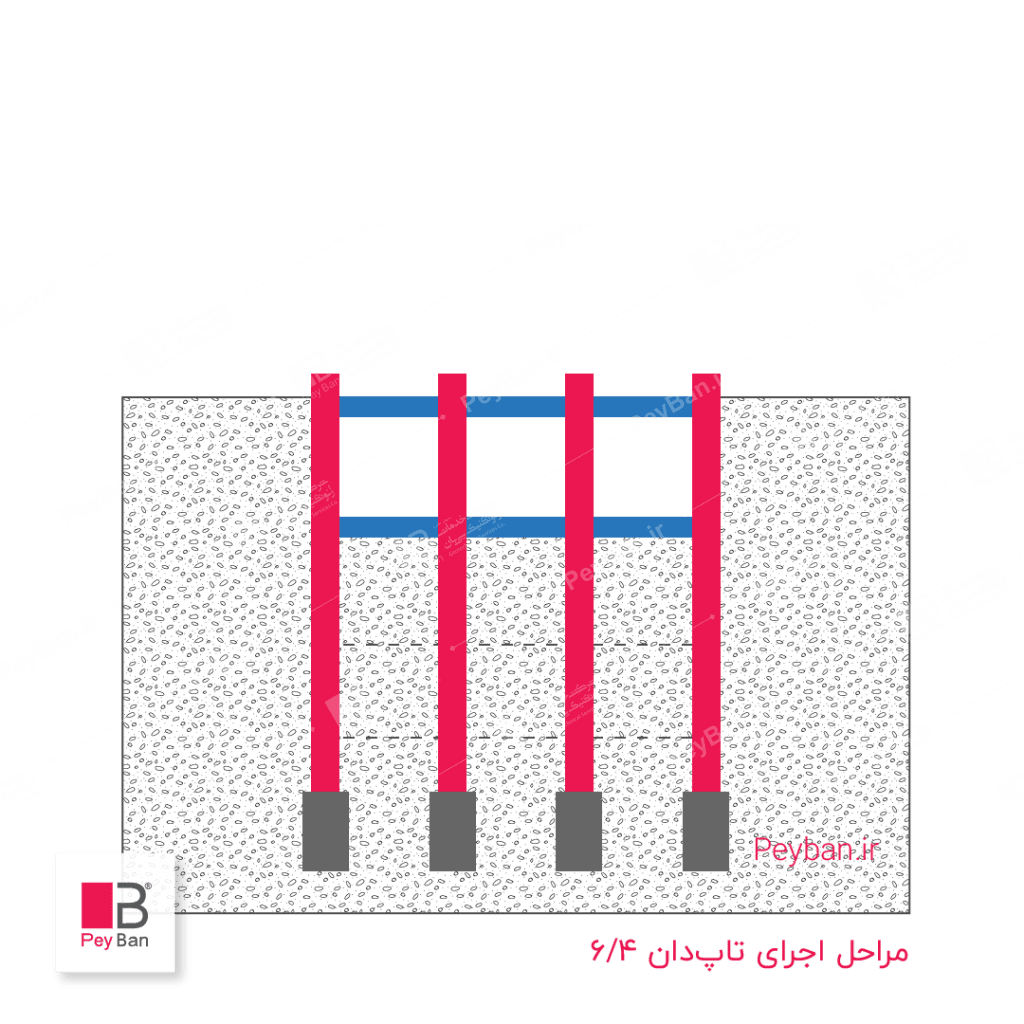
Since floor slabs are cast before excavation, the ground acts as permanent formwork and support, saving time and costs related to temporary slab formwork installation. -
Permanent Slabs Provide Superior Lateral Support Compared to Temporary Steel Bracing:
Unlike bottom-up construction that relies on heavy temporary steel braces, Top-Down uses permanent concrete slabs at different levels to retain perimeter walls. These concrete slabs are stiffer and more durable than steel braces (Roli and Yarwood, 1988), reducing the need to move heavy braces and simplifying site logistics. -
Minimal Disruption to Surrounding Traffic:
The Top-Down method significantly reduces interference with nearby street traffic. This is especially beneficial for projects involving public transportation routes, as roadways can be restored sooner. -
Reduced Impact of Adverse Weather on Subsoil:
By constructing basement floors and ground-level slabs early, the negative effects of weather on the soil are minimized. -
No Need for Neighboring Property Access or Permissions:
Unlike methods such as nailing and anchoring that often require access to adjacent properties (which may infringe on neighbors’ rights according to civil law Article 38), the Top-Down method avoids these legal and practical challenges by limiting excavation within property boundaries.